
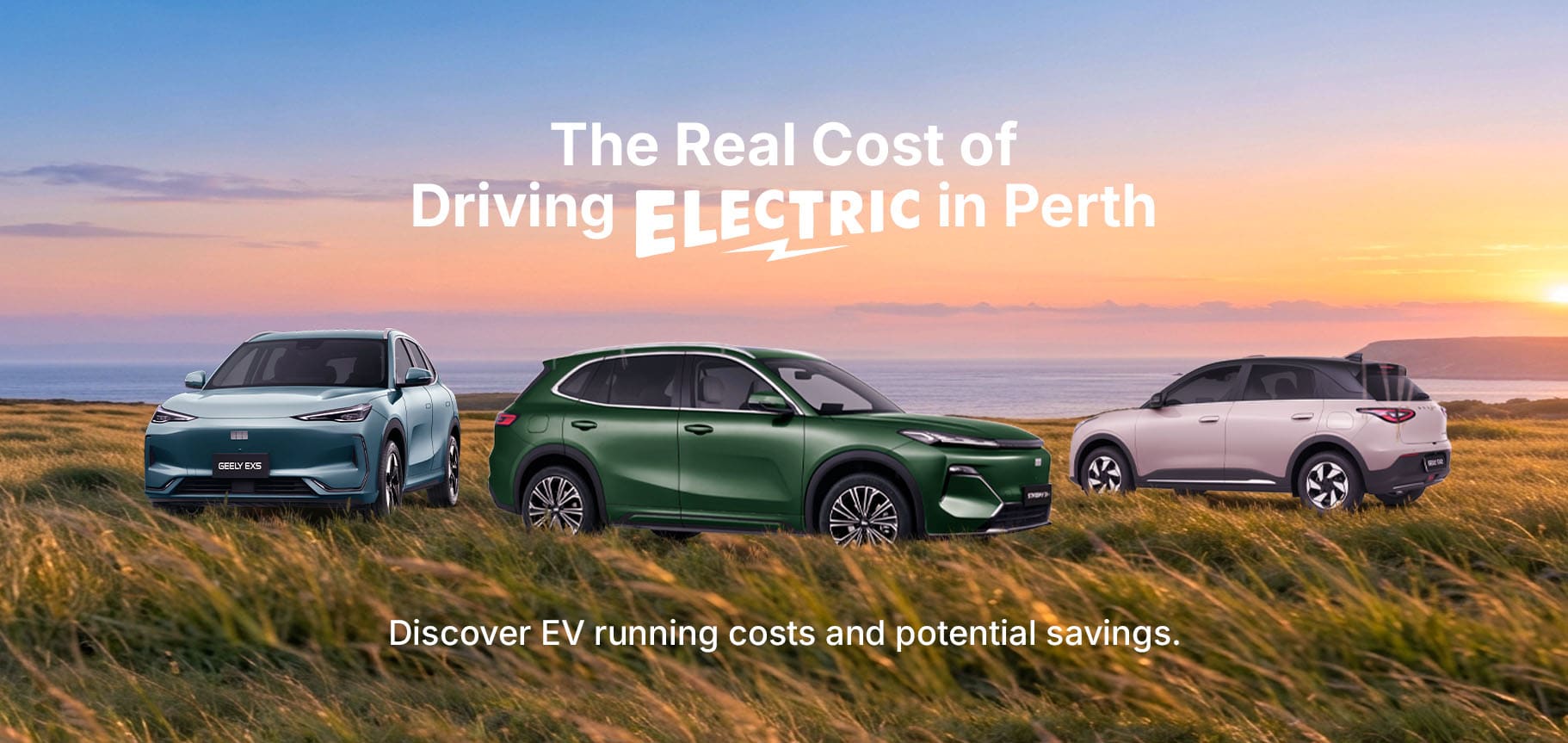
The Real Cost of Driving Electric in Perth
The Real Cost of Driving Electric in Perth
October 22, 2026 12:21 pm
How Much Does It Cost to Run an Electric Car in Perth?
How Much Does It Cost to Run an Electric Car in Perth?
The short answer: electric-car running costs depend heavily on how much you drive, how efficiently the vehicle uses energy and what you pay per kilowatt-hour (kWh). Home charging can be economical, but public charging, insurance, tyres and servicing all belong in a realistic budget.
For Perth drivers considering their first electric car, the useful question is not simply “What does a full charge cost?” It is “What will my typical year of driving cost?” A full battery charge tells you relatively little unless you also know the vehicle’s efficiency, your driving distance and your electricity rate.
Whether you commute around Morley, travel across greater Perth or take occasional longer trips through Western Australia, you can make a sensible estimate before comparing vehicles. The figures below are transparent examples, not advertised prices, official tariffs or promises of savings.
Quick calculation: annual kilometres ÷ 100 × vehicle energy use (kWh/100 km) × your electricity rate ($/kWh). Allow separately for charging losses, home-charger installation and the other costs of ownership.
What does charging actually cost in Perth?
Electricity is billed in kilowatt-hours (kWh), the amount of energy you use. A vehicle’s energy consumption is typically shown as kWh per 100 km. Charging power, measured in kilowatts (kW), is different: it helps describe how quickly energy can be delivered, not the price of a trip.
Suppose a vehicle uses 16 kWh per 100 km and you drive 100 km. It would use about 16 kWh from its battery under those assumed conditions. At a hypothetical electricity rate of 30 cents per kWh, that battery energy costs $4.80. If you allow an extra 10% for charging losses, the illustrative amount drawn from the charger becomes 17.6 kWh, or $5.28.
Actual bills vary with your household plan, charging time, charging equipment and public-charger pricing. Driving speed, weather, air conditioning, hills and load also change energy consumption. Check the tariff that applies to your property or charging station rather than using an advertised “average” as your personal cost.
Four costs to include in your EV budget
Electricity matters, but it is not the whole ownership story. Build a budget using these four areas and compare them with the petrol or hybrid vehicle you would otherwise buy.
Electricity and charging fees
Estimate how many kilometres you will drive and where you will charge. Home, workplace and public AC or DC charging can have different energy prices and additional fees.
Home charging setup
If you want a dedicated wall charger, request a quote that covers both equipment and electrical installation. Property layout, switchboard work and access can change the total.
Servicing, tyres and repairs
EVs do not require engine-oil changes, but still need scheduled inspections, tyres, brakes, cabin filters, fluids and occasional repairs. Check the chosen model’s schedule.
Insurance and fixed costs
Get insurance quotes before ordering. Include registration, finance costs if applicable, depreciation, parking, roadside assistance and any other regular ownership expenses.
Home charging vs public charging: what changes?
For many households, being able to plug in at home is the biggest convenience advantage. However, a renter, apartment resident or driver without dedicated parking may depend more on public or workplace chargers. Neither arrangement should be assumed to have the same price.
As a starting point, map where your car normally sits overnight and where you could charge during the day. Then compare the actual electricity and charger fees at those locations. Consider whether your routine allows slower AC charging or whether you will often need faster DC charging.
Charging at home
Look at your energy plan’s usage rate, any off-peak or time-of-use periods, and whether adding an EV changes the rest of your household’s electricity charges. A dedicated charger may improve convenience, but it adds an upfront cost. Have an appropriately licensed electrical professional assess installation needs.
Using public chargers
Public AC and DC charging operators can set different prices, billing methods and idle or parking fees. Before arriving, check the charger’s availability, connector compatibility, payment method and current price. A charging stop may be convenient but more expensive than charging at home.
Workplace charging and solar
Workplace access or home solar may change your effective charging cost. Solar generation is not automatically free electricity: consider when it is available, the value of energy you would otherwise export, and any equipment required to charge at that time.
A worked example: 15,000 km of electric driving
Let’s use a hypothetical EV driven 15,000 km each year at 16 kWh/100 km. That equals 2,400 kWh of battery energy. Adding a simple 10% allowance for charging losses gives an estimated 2,640 kWh purchased over the year. This is a calculation example, not a specification or efficiency claim for any Geely model.
The table shows what that same 2,640 kWh would cost under four assumed electricity prices. These rates are examples only: they are not current Synergy tariffs or quotes from public charging providers. Actual consumption, charging losses, charging fees and tariff conditions will change the result.
| Illustrative charging scenario | Assumed price per kWh | Example annual energy cost |
|---|---|---|
| Lower-cost charging period | $0.15 | $396 |
| Home charging example | $0.30 | $792 |
| Higher-priced charging example | $0.50 | $1,320 |
| Higher-priced public charging example | $0.70 | $1,848 |
How does EV maintenance compare with a petrol car?
A battery-electric vehicle has no combustion-engine oil, spark plugs or exhaust system, which changes the maintenance work required. It does not mean the car is maintenance-free or that every scheduled service will necessarily be cheaper than a petrol vehicle’s.
Tyre condition and pressure, braking components, suspension, air-conditioning, 12-volt systems and software still matter. Regenerative braking can reduce use of conventional friction brakes in some driving conditions, but brake inspection and maintenance remain important for safety.
Compare the manufacturer’s service schedule, the cost of each scheduled visit and the terms of the vehicle and high-voltage battery warranties. Geely Morley provides servicing support for its vehicles; ask for the current schedule and price information for the specific model and variant you are considering.
Which Geely is worth considering for your driving?
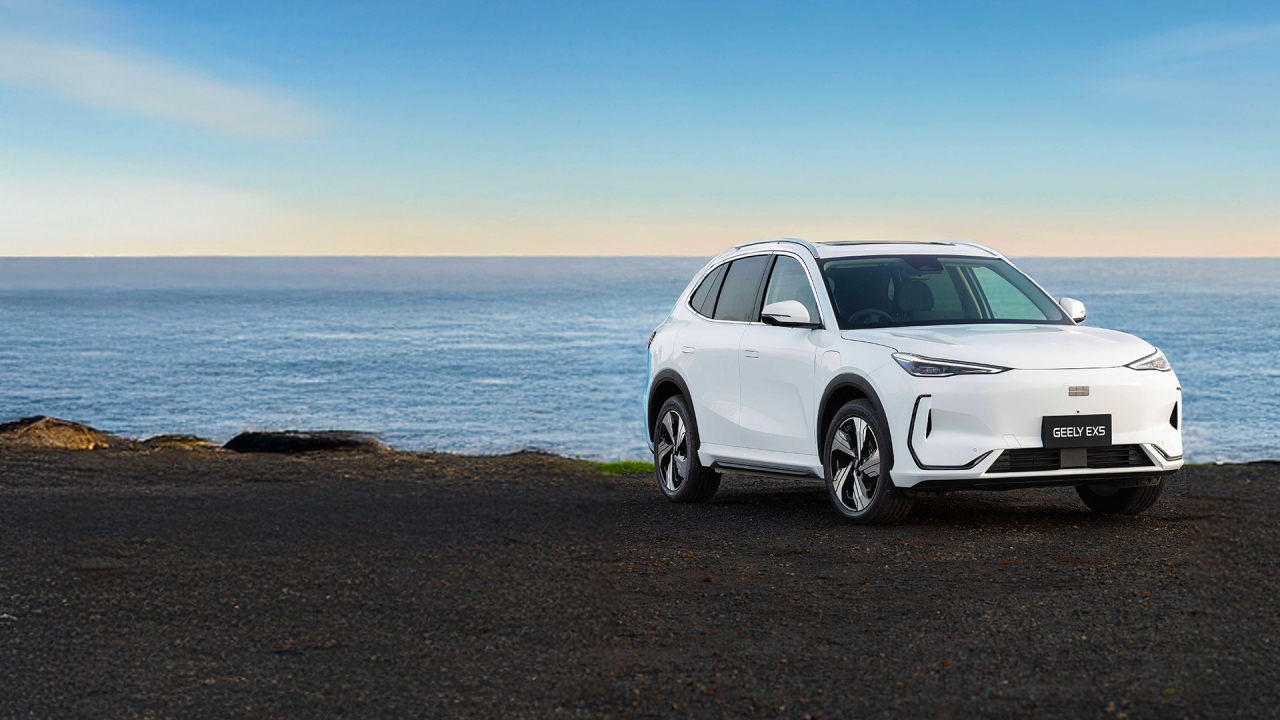
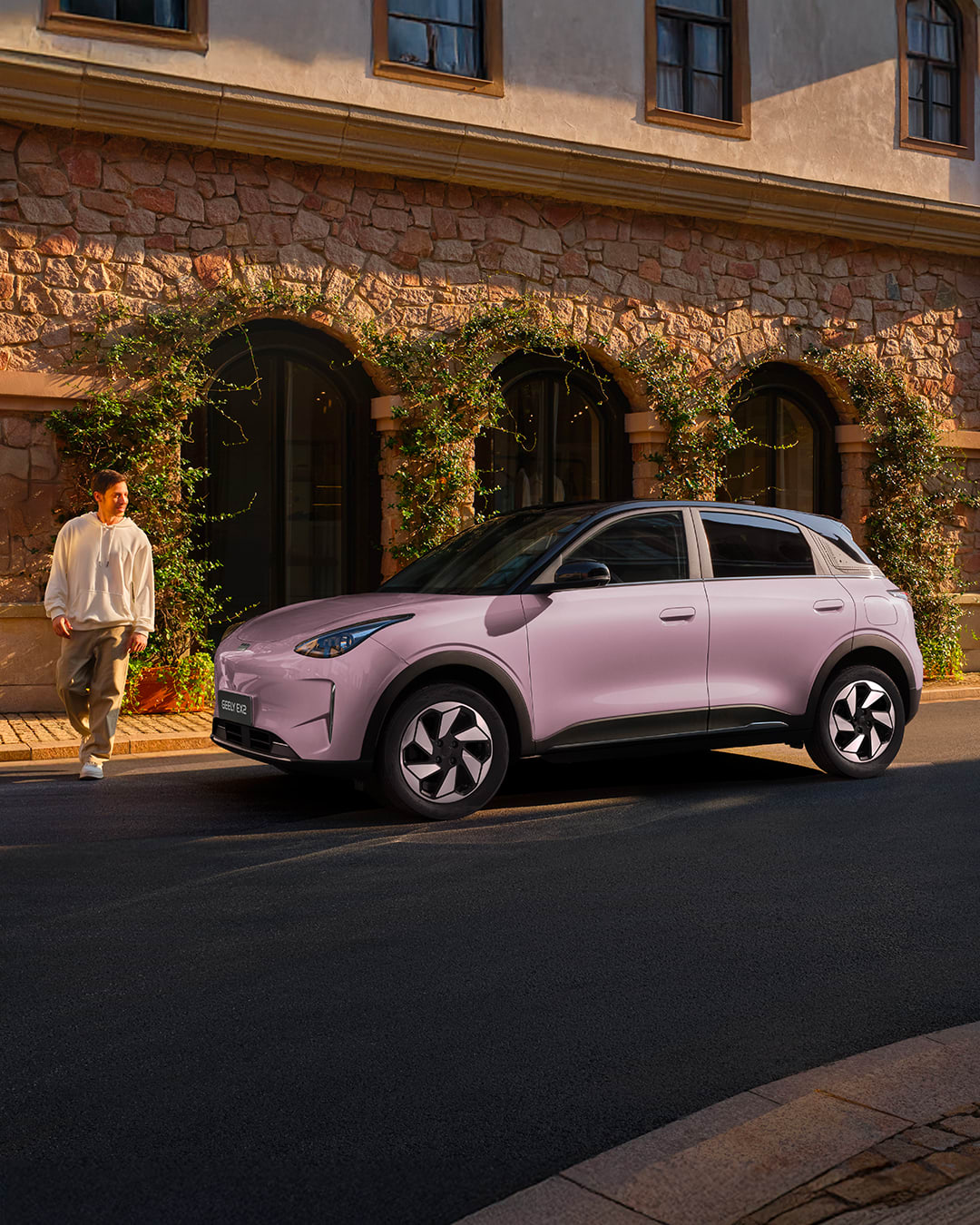
Geely Morley features two fully electric choices—the compact EX2 hatch and EX5 SUV—alongside the Starray EM-i plug-in hybrid SUV. Your preferred body style, passenger and cargo needs, charging access and typical distance are useful ways to narrow your options.
Do not compare these vehicles on battery size or claimed range alone. Check the exact Australian variant for energy consumption, usable range, charging compatibility, equipment and running-cost details. Published test-cycle figures are estimates for comparison; your real-world results may differ.
Geely EX2: compact electric hatch
The EX2 is a fully electric hatchback designed around everyday practicality and urban use. If easier parking, shorter commutes and compact dimensions matter most, it belongs on your shortlist. Compare available variants for battery, range and features before calculating your costs.
Geely EX5: all-electric SUV
The EX5 is an all-electric SUV worth considering if you want an SUV body style for passengers, luggage and daily travel. Build your estimate around the particular variant’s Australian efficiency figures and the charging arrangements you will realistically use.
Starray EM-i: plug-in hybrid alternative
The Starray EM-i combines plug-in electric driving with a petrol engine. Its running-cost calculation is different because both purchased electricity and petrol may be involved. How often you charge and how frequently the petrol engine operates can materially change your fuel bill.
Make the calculation personal before you decide
Use your own annual kilometres, electricity plan, public-charging needs and insurance quote to compare vehicles fairly. For a practical starting point, explore the Geely EX2 if a compact EV suits your routine, the Geely EX5 if you prefer an electric SUV, or the Geely Starray EM-i if a plug-in hybrid better matches your charging access and longer journeys.
Bring your weekly kilometres, usual routes and questions about home charging to Geely Morley. The team can help you review current Australian vehicle details and available stock at 102/104 Broun Avenue, Morley WA 6062.
Find the right Geely for your budget
Compare charging requirements, ownership costs and the available Geely range with the Geely Morley team. Ask about current variants and arrange a test drive that reflects your everyday driving.
Frequently asked questions
Is it cheaper to charge an electric car at home in Perth?
It can be, especially where a suitable lower-cost electricity period is available. However, the answer depends on your household tariff, installation costs and the prices charged by the public chargers you would otherwise use.
How can I calculate my annual EV charging costs?
Multiply annual kilometres divided by 100 by the vehicle’s kWh/100 km energy use, then by the electricity price per kWh. Add a reasonable allowance for charging losses and any fixed, parking or session fees.
Do electric cars still need regular servicing?
Yes. EVs still need manufacturer-specified checks and maintenance for brakes, tyres, suspension, fluids, filters and other systems. Follow the service schedule for your actual model and variant.
Can I own an electric car without a home charger?
Possibly. Workplace and public charging may suit some drivers, but assess availability, charging time, compatibility and cost before deciding. A lack of reliable charging access can make ownership less convenient.
Are running costs for the Starray EM-i the same as a fully electric Geely?
No. The Starray EM-i is a plug-in hybrid, so its costs can include both electricity and petrol. The EX2 and EX5 are battery-electric vehicles. Your charging habits and driving pattern affect which option fits your budget.